The timing was what made it unsettling.
On Christmas Day, in the middle of light conversations and celebration, a different kind of headline appeared. I scrolled past it once. Then I stopped and went back to read it slowly.
President Trump airstrike in Northern Nigeria.
That alone made me pause. Nigeria doesn’t often appear in U.S. military headlines like this, and when it does, it’s never casual. President Trump airstrike in Northern
Nigeria immediately felt like one of those moments that deserved more than a glance.
So I stopped scrolling. And I started reading.
What President Trump Said, and Why It Drew Global Attention
US President Trump announced that American forces had launched airstrikes against Islamic State (ISIS) militants operating in Northern Nigeria. The statement was direct and confident, very much in character.
No qualifiers.
No uncertainty.
President Trump described the militants as “terrorist scum,” making it clear that President Trump airstrike in Northern Nigeria was being framed as a decisive counter-terrorism action.
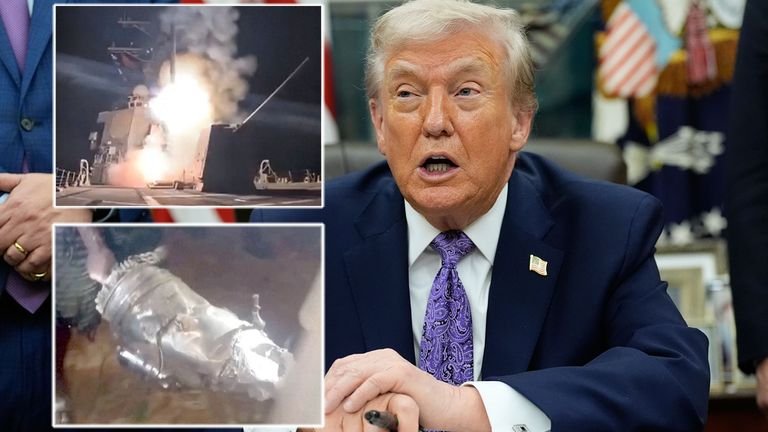
Within hours, major international outlets began confirming that President Trump airstrike in Northern Nigeria wasn’t just rhetoric. Reuters, Sky News, and The Guardian all reported on the operation shortly after the announcement.
Where President Trump Airstrike in Northern Nigeria Happened
This was the first thing I wanted clarity on.
According to Reuters and Nigerian security officials, President Trump airstrike in Northern Nigeria took place in northwest Nigeria, specifically in Sokoto State.
The reported target was the Bauni Forest, a remote area that has increasingly become a hideout for ISIS-linked groups.
For years, insecurity in this region remained largely local. President Trump airstrike in Northern Nigeria changed that overnight.
Nigeria’s Response to President Trump Airstrike in Northern Nigeria
The first question that came to my mind wasn’t even political.
It was practical.
Did Nigeria approve this?
According to official statements, yes. Nigerian authorities confirmed that President Trump airstrike in Northern Nigeria:
- Was coordinated with Nigerian security agencies
- Involved shared intelligence
- Fell under existing U.S.–Nigeria counterterrorism cooperation
On record, President Trump airstrike in Northern Nigeria was a coordinated operation.
But that led to a more uncomfortable question…
Who Was Targeted in President Trump Airstrike in Northern Nigeria
Verified reports indicate that:
- The targets were ISIS-linked militant camps
- The locations were isolated forest hideouts
- Several militants were reportedly killed
So far:
- No civilian casualties have been confirmed
- No official death toll has been released
Any discussion of President Trump airstrike in Northern Nigeria has to sit with that uncertainty.
Approval Behind Closed Doors vs Public Awareness
Here’s the part that stayed with me, and a lot of people.
Most Nigerians didn’t hear about President Trump airstrike in Northern Nigeria from their own government.
There was no national briefing. No clear public communication.
Many people only became aware after President Trump spoke about it himself.
If he hadn’t posted or spoken publicly, a large number of Nigerians might still not know that President Trump airstrike in Northern Nigeria occurred at all.
That gap matters.
Because approval at the government level means very little if the public remains in the dark.
If There Was No Insurgency There, Why Strike at All?
After the announcement, reports began circulating from people in and around the affected area claiming something unsettling: they were not aware of any active military insurgency in that specific location at the time of President Trump airstrike in Northern Nigeria.
No visible clashes.
No public warnings.
No recent attacks they could point to.
To be clear, these are local accounts, not verified military intelligence. But they matter, because they raised a question many Nigerians quietly asked:
Why there?
According to international reporting, President Trump airstrike in Northern Nigeria targeted forested areas believed to house ISIS-linked camps. Intelligence like this is often classified and shared only between governments.
But when people living nearby say the area had no known insurgent activity, it exposes more than a security concern. It exposes a communication gap.
What This Says About Information and Power in Nigeria
This moment exposed something deeper than security cooperation.
President Trump airstrike in Northern Nigeria became global news before it became a local conversation.
Reuters confirmed it. Sky News explained it. The Guardian analyzed it.
Meanwhile, many Nigerians were still scrolling past Christmas photos.
Silence doesn’t equal stability. It often just means exclusion.
Why President Trump Airstrike in Northern Nigeria Feels Bigger Than One Strike
This moment signals
- Growing global concern about Nigeria’s security crisis
- Increased international willingness to intervene
- A shift in how extremist threats in Nigeria are viewed
Airstrikes may disrupt groups, but President Trump airstrike in Northern Nigeria does not erase the conditions that allow them to exist.
What President Trump Airstrike in Northern Nigeria Does Not Mean
It does not mean:
- Nigeria has lost sovereignty
- A full-scale U.S. intervention is underway
- The security crisis is solved
It means one coordinated operation occurred, nothing more.
The Northern Nigeria Reality Behind the Headlines
For people living in the north, insecurity isn’t breaking news.
It’s daily life.
That’s why President Trump airstrike in Northern Nigeria may feel distant to some, and deeply personal to others.
Why Trump’s Name Changed the Conversation
Whether admired or criticized, Trump’s involvement guarantees visibility.
President Trump airstrike in Northern Nigeria:
- Pulled Nigeria into global focus
- Forced rapid official confirmations
- Happened on Christmas Day
That contrast alone made the story linger.
My Take on This
Nigeria may have approved President Trump airstrike in Northern Nigeria. But Nigerians themselves were largely left out of the conversation.
That gap, between decisions made behind closed doors and information reaching the public, says a lot about how power and communication really work in this country.
What stayed with me wasn’t the politics.
It was the reminder that what happens in quiet forests in Northern Nigeria can now echo across the world, even on Christmas Day.
Conclusion
If you enjoyed reading this, share it with someone who’s been trying to make sense of what’s really happening beyond the headlines.
Stories like this matter, not because they trend, but because they shape how we understand power, security, and whose voices are heard (or ignored). Sometimes, the most important conversations start after the news cycle moves on.
To stay connected, follow us on Instagram, X (Twitter), Facebook, and LinkedIn, and keep up with our latest stories and perspectives here on the blog.
Thank you for reading, and for staying curious.
🔥Trending Nowstuff.