No products in the cart.

Best Long-Lasting Perfumes for Women (2026): Smell Good All Day Without Reapplying
Looking for perfumes that actually last all day? Here are the best long lasting perfumes…






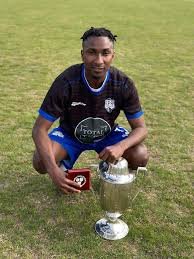
There are some stories you don’t rush through. Not because they’re long or complicated, but because they sit heavy. The kind you read slowly, then pause, then reread a line or two, not out of confusion, but out of disbelief.
That’s the feeling many Nigerians woke up to after news broke that Nigerian footballer Saburi Adeniji dies after brain injury in the UK.
No scandal. No controversy. No drama. Just loss.
A young life. A growing career. A family waiting. A future that was still being written, suddenly cut short, far from home.
And in moments like this, headlines feel inadequate. They tell you what happened, but not what it means.
According to reports, Nigerian footballer Saburi Adeniji died after suffering a severe brain injury while in the United Kingdom. He had been admitted into intensive care and remained unconscious for weeks before eventually passing away.
His death was confirmed by his football club, Kings Park Rangers FC, based in the UK, who described him as a talented and deeply loved player. You can check more on it here
What makes the story even more heartbreaking is that his wife and young daughter reportedly travelled from Nigeria to the UK, hoping to see him, only to arrive shortly after he had passed.
For many readers, that detail alone turned the story from sad to devastating.
To understand why this loss resonates, you have to understand who Saburi Adeniji was becoming.
Saburi Adeniji was a fast-rising Nigerian footballer, building his career quietly, steadily, and away from the glare of global fame. He wasn’t a household name yet, and that’s exactly why this hurts differently. He was still in the becoming stage.
Playing in the UK’s lower leagues, Adeniji represented the dream many young Nigerian footballers chase: leave home, work hard, grow professionally, and eventually break through.
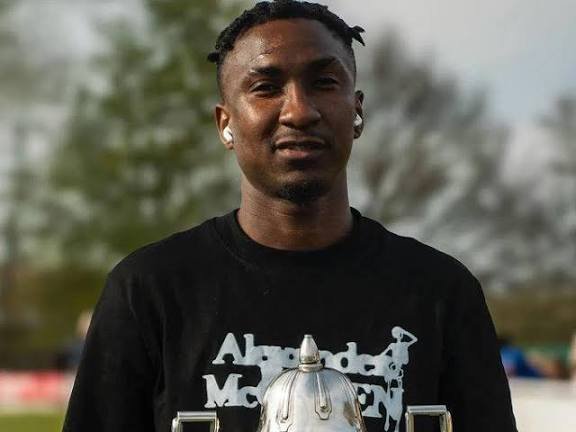
Friends, teammates, and club officials have described him as disciplined, humble, and committed — the kind of player every dressing room needs, even if the spotlight hasn’t found him yet.
And now, Nigerian footballer Saburi Adeniji dies after brain injury in UK, before that dream could fully unfold.
There is something uniquely painful about dying away from home, especially for Africans in the diaspora.
Saburi Adeniji didn’t pass surrounded by childhood friends or extended family. He passed in a hospital bed in a foreign country, while loved ones crossed borders and oceans hoping to say goodbye.
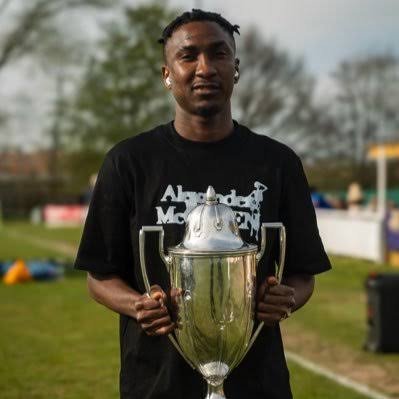
For many Nigerians reading this story, it strikes a familiar fear: what happens if something goes wrong while you’re chasing a better future abroad?
The reality of migration, sacrifice, and distance is rarely discussed until moments like this force the conversation.
Football is often described as “the beautiful game,” but it is also physically demanding and, at times, dangerous.
While details surrounding the exact cause of Saburi Adeniji’s brain injury remain limited, cases like this reignite broader conversations about player safety, medical support, and health monitoring, especially for athletes outside top-tier leagues.
Lower-league footballers often don’t have the same access to elite medical care, insurance, or long-term support systems enjoyed by global superstars. When injuries happen, the margin for error is thinner.
The fact that Nigerian footballer Saburi Adeniji dies after brain injury in the UK has prompted renewed calls online for better welfare structures for young players abroad.
Tributes have poured in from teammates, fans, and members of the Nigerian football community.
Kings Park Rangers FC described Adeniji as:
> “A player who gave everything on and off the pitch, and whose presence will be deeply missed.”
Supporters also began sharing messages of condolence and fundraising efforts to support his family, a reminder that while football can be ruthless, its community can also be deeply human. Check here for more
It’s easy for stories like this to become statistics: Another young athlete.
Another death abroad.
Another headline scrolled past.
But Nigerian footballer Saburi Adeniji dies after brain injury in UK is not just a data point. It’s a reminder of how fragile ambition can be, and how quickly life can change.
He was a husband. A father. A son. A teammate. A dreamer.
And for many Nigerians, his story feels personal because it mirrors so many untold journeys: people who leave home quietly, carry hope loudly, and are rarely celebrated unless something goes wrong.
In the age of social media, tragedy often invites speculation. But this is not a story that needs theories or blame.
It needs space.
Space to mourn.
Space to reflect.
Space to acknowledge that not every promising journey ends the way we expect.
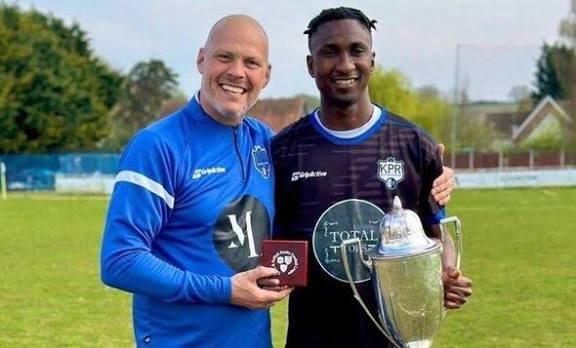
As the football world absorbs the news that Nigerian footballer Saburi Adeniji dies after brain injury in UK, what matters most is remembering him with dignity, not reducing his life to the moment it ended.
This isn’t just a sports story.
It’s a migration story.
A healthcare story.
A family story.
A Nigerian story.
It speaks to the risks young Africans take chasing opportunity abroad, often without safety nets. It highlights the emotional cost of distance. And it reminds us that behind every “rising talent” headline is a human being with people waiting for them.
The news that Nigerian footballer Saburi Adeniji dies after brain injury in UK is not the kind of story that fades quickly. It lingers, because it forces us to confront how unpredictable life is, even for those doing everything right.
There are careers that never reach their peak, dreams that don’t get their climax, and lives that end before the applause arrives.
Saburi Adeniji deserved more time.
And while his journey ended too soon, the way he is remembered, with respect, empathy, and care, still matters.
If you enjoyed this story
Follow the blog for more thoughtful takes on sports, culture, and the human stories that live behind the headlines.
Share this piece with someone who understands that not all important stories come with trophies, and join the conversation with us on Instagram, Facebook, LinkedIn, and Twitter.