Every January, I find myself doing the same thing with my new year resolutions, opening a fresh page, full of hope, while knowing deep down that I’ve been here before.
We tell ourselves this year will be different. We tell ourselves we are going to get better and achieve all our goals.
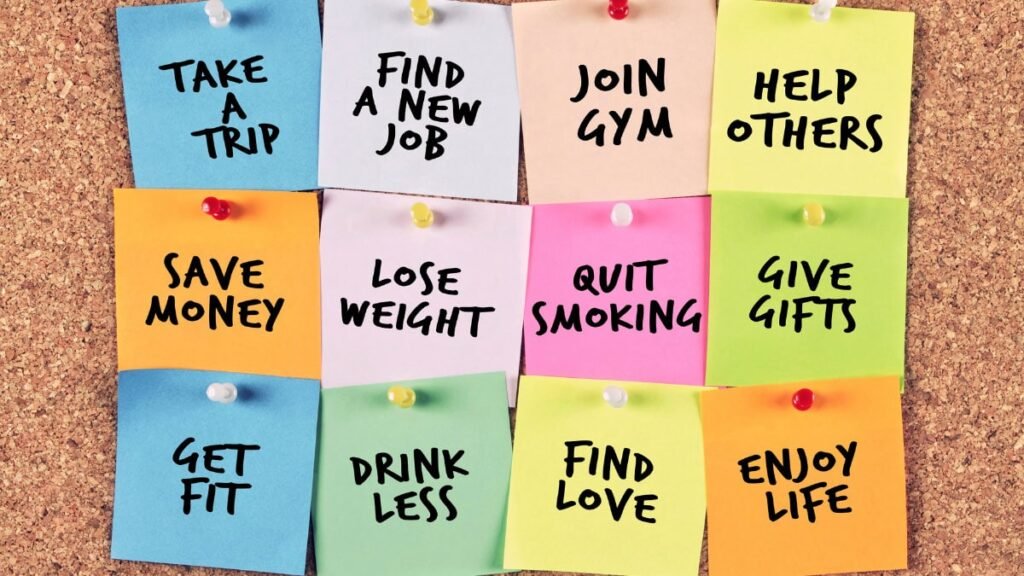
We write new year resolutions with clean handwriting and big hope.
And I get it. I really do.
I’ve even been there more times than I can count. I’ve written resolutions while feeling motivated, tired, excited, scared, sometimes all at once. I’ve promised myself discipline, consistency, glow-ups, and breakthroughs. I’ve sworn that this year, I’ll finally follow through.
Some years, I did.
Many years, I didn’t.
So instead of another “new year, new me” post, I want to talk to you about the truths we don’t say out loud, the ones most of us are already feeling as January approaches.
If you’ve ever looked at your new year resolutions and thought, “Why do I always do this?”, this is for you. This is for everyone.
1. Most New Year Resolutions Are Written From Guilt, Not Clarity

A lot of new year resolutions aren’t born from inspiration.
They’re born from pressure and overwhelm.
Pressure to do more and be more.
Be better.
Catch up.
Fix everything all at once.
Sometimes we’re not asking, “What do I actually want?”
We’re asking, “What should I have achieved by now?”
And that’s a hard place to build anything from, because guilt doesn’t create sustainable change. It only creates urgency and exhaustion.
2. Motivation Doesn’t Last as Long as We Pretend It Will
January motivation is loud.
By February, it’s quieter.
By March, real life is back in full force. It hits you and you don’t know what to do.
This doesn’t mean you’re lazy, far from that. It means you’re human.
The American Psychological Association explains that motivation naturally fluctuates which is why relying on excitement alone makes new year resolutions difficult to sustain long-term.
New year resolutions often fail not because we don’t care, but because we assume motivation will carry us through months that actually require discipline, rest, and patience.
Why New Year Resolutions Feel Harder Than We Expect
We often underestimate how much energy consistency requires.
Big intentions are exciting. Trust me, they give this adrenaline that gets your blood pumping.
Sustaining them quietly is not.
When the excitement fades, what’s left is routine, and routine doesn’t always feel rewarding at first. If anything, it feels tiring and boring.
As James Clear explains in his work on habit formation, real change comes from small actions repeated consistently, not dramatic promises made once a year.
That’s where many new year resolutions struggle, not because they’re unrealistic, but because they demand patience we didn’t plan for.
3. We Set Goals for a Version of Ourselves That Doesn’t Exist Yet
This one is uncomfortable.
We plan new year resolutions for the version of us that wakes up early every day, never procrastinates, always has energy, and somehow has life figured out.
But the version of you reading this?
That’s who has to carry the goal.
Harvard Business Review points out that people often set goals for who they want to be, instead of who they currently are.
If your resolution doesn’t respect your current reality, your schedule, your energy, your mental space, it will always feel heavy.
4. Consistency Is Harder Than Big Dreams
Big dreams are exciting.
Consistency is quiet.
No one claps for showing up on a random Tuesday.
No one celebrates the boring middle.
Yet that’s where new year resolutions either survive or die not in January, but on ordinary days.
Research shared by Harvard Business Review shows that habits stick when they’re built into daily life.
Consistency isn’t glamorous, but it’s honest.
5. Falling Off Doesn’t Mean You’ve Failed
This is where many of us stop completely.
We miss one day.
Then one week.
Then we tell ourselves, “I’ve already messed it up.”

But new year resolutions aren’t contracts.
They’re intentions.
You’re allowed to pause.
You’re allowed to restart.
You’re allowed to adjust.
Progress isn’t erased because you stumbled, it’s delayed, not destroyed.
6. You Don’t Need 10 Resolutions to Prove You’re Serious
Some of the biggest changes come from one small decision done well.
One habit.
One boundary.
One honest shift.
According to Psychology Today, setting too many goals at once often leads to burnout instead of progress
New year resolutions don’t have to be dramatic to be meaningful. Sometimes less isn’t laziness, it’s wisdom.
7. The Real Win Is Awareness, Not Perfection
If this year you learn what drains you,what excites you,
what no longer fits, that counts.
The American Psychological Association highlights self-awareness as a key factor in long-term personal growth. If your new year resolutions help you understand yourself better, even if they change, that’s growth.
Bonus Truth: Starting Again Is Still Progress
Starting over doesn’t mean you failed.
It means you cared enough to try again.
Every time you revisit your new year resolutions, you’re learning something, about your limits, your values, your capacity in that season of life.
Growth doesn’t always look like forward motion. Sometimes it looks like returning with more honesty than before.
And that still counts.
My Honest Take
I don’t think new year resolutions are useless.
I also don’t think they’re magic.
What matters is how we approach them.
With kindness instead of punishment.
With honesty instead of pressure.
With flexibility instead of fear.
If you’re entering this year feeling hopeful and tired, ambitious and unsure, you’re not behind. You’re just human.
Conclusion
If this sounded like something you’ve been thinking but haven’t said out loud, you’re not alone.
Share this with someone who’s quietly carrying their own new year resolutions, especially the ones who feel like they’re always “starting over.”
Follow us on Instagram, X (Twitter), Facebook, and LinkedIn, and keep reading the blog for stories that feel real, thoughtful, and human.
Thank you for being here.
And thank you for starting the year with honesty.
🔥Trending Nowstuff.