No products in the cart.
Iraq World Cup Playoffs Crisis as Iran War Disrupts Travel
The Iraq World Cup playoffs are facing unexpected challenges as regional tensions involving Iran lead…



I came across the story almost by accident, not through a headline screaming for attention, but in the quiet way news sometimes travels when it knows it will eventually be found.
A few posts here. A shared link there. Then a pause.
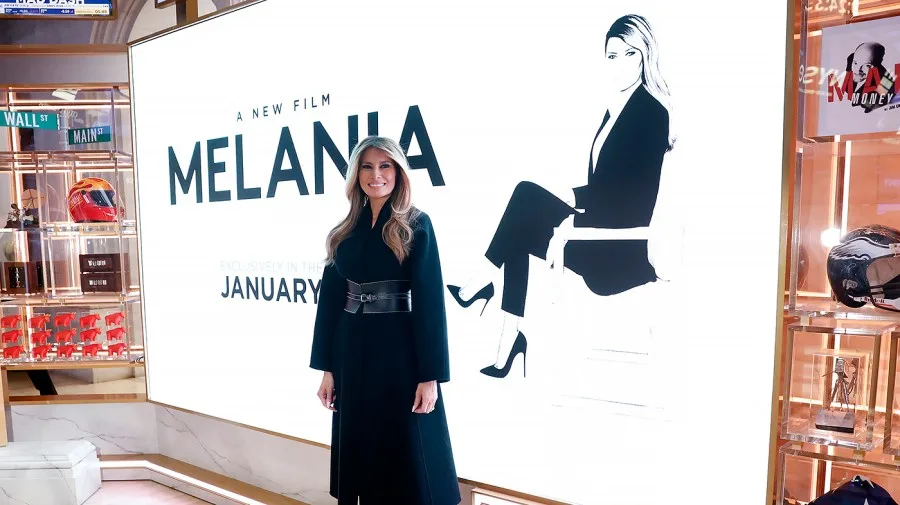
The Melania documentary had been pulled from South Africa theaters, reportedly for political reasons. No countdown. No warning. Just… gone. And what caught my attention wasn’t the decision itself, but how quietly it happened. The kind of quiet that makes you stop scrolling and actually read.
Because when a film disappears without noise, it’s rarely because it’s unimportant. More often, it’s because someone decided it was too important, or too complicated, to leave in circulation.
There were no official statements dominating the news cycle. No dramatic explanations laid out for public debate. Instead, the story surfaced through online conversations and social media reports, including posts outlining the circumstances surrounding the withdrawal and the political sensitivity attached to it. And in that silence, questions began to pile up.
Why this documentary? Why now? And why South Africa?
On the surface, it might seem like a routine programming decision, a film pulled, schedules adjusted, audiences redirected elsewhere. But the more you sit with it, the harder it becomes to see it as just another title leaving the cinema rotation. Stories like this don’t exist in isolation. They live inside context, history, and perception.
And when politics and culture overlap this closely, the real story often isn’t what’s shown on screen, it’s what’s removed from it.
That’s where the conversation around the Melania documentary begins, not with outrage or certainty, but with curiosity, and the uneasy awareness that absence, in moments like this, is rarely accidental.
According to early reports, the Melania documentary was withdrawn from South Africa theaters due to concerns around its political implications. While no formal government ban was announced, theaters stopped screening the film after internal reviews.
That distinction is important.
This wasn’t framed as censorship through law, but as a precautionary move, one rooted in sensitivity to political perception rather than legal obligation.
Still, the outcome was the same: audiences no longer had access to the film in cinemas.
To understand why the Melania documentary attracted this level of caution, you have to understand who Melania Trump is beyond the title of “First Lady.”
Melania Trump remains closely tied to one of the most polarising political eras in recent U.S. history. Even projects that aim to be personal or reflective are often interpreted through a political lens.
For readers unfamiliar with her background, Melania Trump’s public and political profile has long been shaped by global media scrutiny, symbolism, and association.
That makes any documentary about her more than just a biography, it becomes a statement, intentional or not.
South Africa’s history makes it particularly attentive to how politics and media intersect.
From apartheid-era suppression to ongoing debates about freedom of expression, cultural platforms in the country often tread carefully. Decisions about what is screened publicly are rarely neutral, they reflect awareness of social tension, political memory, and public responsibility.
In that context, pulling the Melania documentary appears less random and more calculated.
Here’s where the conversation gets complicated.
Some critics view the removal of the Melania documentary as a soft form of censorship, not enforced by law, but achieved through pressure and precaution.
Others argue it’s an example of institutional caution: an attempt to avoid importing foreign political tensions into local cultural spaces.
Globally, this kind of decision isn’t unusual. Film censorship and political sensitivity have long shaped where, how, and whether certain stories are told.
The Melania documentary now sits within that long-standing global pattern.
Timing is rarely accidental.
The withdrawal comes at a moment when global politics are once again under strain, and when figures associated with controversial leadership eras continue to spark debate far beyond their home countries.
In such a climate, even documentaries framed as personal narratives can be seen as politically loaded.
That context likely contributed to the decision to pull the Melania documentary from South Africa theaters, not necessarily because of what it says, but because of when it appeared.
Interestingly, there hasn’t been widespread outrage.
Instead, the response has been measured curiosity.
People are asking:
History shows that when a film disappears quietly, interest often grows louder elsewhere.
The situation surrounding the Melania documentary highlights a larger challenge facing modern documentary filmmaking.
Personal stories tied to powerful political figures rarely remain personal. They become contested, interpreted, and sometimes restricted, depending on where they are shown.
For filmmakers, it’s a reminder that context can determine reception as much as content.
This isn’t just about Melania Trump. It’s about how political symbolism travels across borders, and how countries choose to manage that symbolism within their cultural spaces.
The decision to pull the Melania documentary raises important questions:
The Melania documentary being pulled from South Africa theaters may not dominate headlines for long. But it leaves behind a meaningful conversation about power, perception, and the quiet ways politics shapes culture.
Sometimes, what we’re not allowed to see tells us just as much as what we are.
If you enjoyed this story, follow the blog for more thoughtful takes on politics, culture, and the moments that sit between headlines and history.
Share it with someone who notices the details others scroll past, and join the conversation with us on Instagram, Facebook, LinkedIn, and X, where stories don’t end when the screen fades to black.