No products in the cart.

Best Long-Lasting Perfumes for Women (2026): Smell Good All Day Without Reapplying
Looking for perfumes that actually last all day? Here are the best long lasting perfumes…








I sat with this story longer than I usually do.
When I first read about the Long Island murder suicide, I didn’t immediately start typing. I paused. Because stories like this aren’t just headlines,cthey represent lives interrupted, families shattered, and communities left asking questions that don’t have easy answers.
It’s easy to scroll past crime stories. We see them every day. But the Long Island murder suicide felt different. Maybe because it involved not just a fatal attack, but a teenager who survived. Maybe because it unfolded in a quiet residential neighborhood. Or maybe because behind the police tape and flashing lights, there was a family that will never be the same.
This isn’t just another news cycle update. The Long Island murder suicide is a reminder of how quickly domestic situations can escalate, and how devastating the consequences can be.
According to law enforcement officials, the Long Island murder suicide occurred in Farmingville, a community in Suffolk County.
Police say a man in person of Marcos Leal, 57, fatally stabbed his estranged wife, Adriana Barbosa, 46 inside a home before injuring a teenage relative who was present at the scene. Authorities believe the suspect then attempted to take his own life in what investigators are describing as an attempted murder-suicide.
The woman was transported to a nearby hospital but was pronounced dead. The teenager sustained non-life-threatening injuries and is expected to recover physically.
The suspect survived and was hospitalized. Charges are expected to include murder and other related offenses.
ABC7 New York reported on the developing investigation and police response, which you can read here
The Long Island murder suicide is now under active investigation as authorities piece together the timeline of events.
Farmingville is not a place most people associate with violent crime. That’s what makes the Long Island murder suicide even more unsettling.
Neighbors described the area as typically quiet. Residential. Family-oriented.
When violence happens in places that feel ordinary, it creates a ripple effect of fear and disbelief. The Long Island murder suicide has left residents shaken, wondering whether warning signs were missed or whether anything could have prevented the tragedy.
It’s one thing to read about incidents happening far away. It’s another when it unfolds on your block.
While details surrounding the Long Island murder suicide are still emerging, authorities have confirmed that the suspect and victim were estranged.
Situations involving estranged partners can be particularly volatile. According to data from the National Coalition Against Domestic Violence, domestic-related incidents often escalate during periods of separation.
That broader context doesn’t excuse what happened in the Long Island murder suicide, but it does highlight a pattern that experts have long warned about: when relationships break down under tension, the risk of violence can increase.
Understanding that pattern is crucial if communities hope to prevent future tragedies.
One of the most heartbreaking aspects of the Long Island murder suicide is that a teenager was caught in the middle.
Police confirmed the teen sustained injuries but survived. While the physical wounds may heal, the emotional impact of experiencing a violent event like the Long Island murder suicide can linger much longer.
It’s impossible to fully comprehend what that moment must have been like inside that home. The fear. The chaos. The shock.
When tragedies unfold in domestic spaces, they disrupt the sense of safety we associate with home.
Since the suspect survived the attempted murder-suicide, the Long Island murder suicide will now move into the legal system.
Authorities are expected to pursue murder charges, along with other related offenses. Court proceedings will likely examine the events leading up to the attack, including any prior reports, restraining orders, or documented disputes.
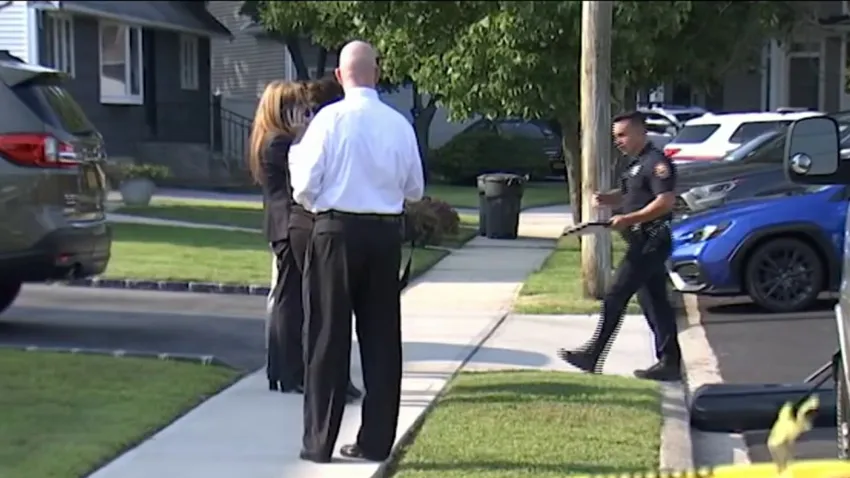
For now, investigators continue gathering evidence tied to the Long Island murder suicide, and more details may emerge in the coming weeks.
Writing about the Long Island murder suicide isn’t about sensationalism. It’s about awareness.
Every time a domestic incident escalates to lethal violence, it underscores the urgency of intervention, support systems, and accessible resources for people in dangerous situations.
The Long Island murder suicide is tragic on its own. But it also represents something larger, a reminder that domestic violence remains a serious issue affecting families across communities.
If you or someone you know is experiencing domestic violence, resources are available through organizations like the National Domestic Violence Hotline
Help exists. And reaching out can make a difference.
When I think about the Long Island murder suicide, I don’t just think about police statements. I think about the woman whose life ended. I think about the teenager who survived. I think about extended family members who received devastating phone calls.

Crime stories often get reduced to statistics. But behind the phrase Long Island murder suicide are real people whose futures changed overnight.
It’s easy to become numb to tragic news. But pausing, even briefly, reminds us that empathy still matters.
As investigators continue examining the Long Island murder suicide, more clarity will likely come regarding motive, prior warning signs, and legal proceedings.
Court appearances, formal charges, and further police briefings may provide additional insight into how the events unfolded.
For now, what remains is a community grieving and a family coping with unimaginable loss.
The Long Island murder suicide that left a woman dead and a teenager injured is a devastating reminder of how quickly domestic tensions can escalate into irreversible tragedy.
While the legal process will now take its course, the emotional toll of the Long Island murder suicide will linger far beyond courtroom proceedings.
Behind every headline is a family forever changed. And while news cycles move on, the people directly affected must rebuild their lives in the aftermath.
Stories like the Long Island murder suicide are painful to read and difficult to write, but they are important. Not for shock value. But for awareness, accountability, and the hope that increased understanding can prevent future harm.
If this story stirred up something within you, follow the blog for more in-depth reporting on major incidents, community safety, and stories that go beyond the surface.
Share this article to keep conversations about prevention, support, and awareness going and also follow us on our social media platforms, Instagram, Facebook, LinkedIn and X


visit article says:
It’s the best time to make some plans for the future and it’s time
to be happy. I’ve read this post and if I could I desire to suggest
you few interesting things or suggestions. Perhaps
you can write next articles referring to this article. I desire to
read more things about it!