No products in the cart.

Best Long-Lasting Perfumes for Women (2026): Smell Good All Day Without Reapplying
Looking for perfumes that actually last all day? Here are the best long lasting perfumes…






I didn’t read the headline and rush to share it. I read it, closed the tab, and then went back again.
Not because it was shocking, but because it felt intentional.
The conversation around Turkey and Nigeria counterterrorism talks has been quietly building, and this latest moment felt less like a sudden announcement and more like the continuation of something already in motion. The kind of diplomatic update that doesn’t scream for attention, but asks you to slow down and actually think about what’s being said.
On the surface, it sounds familiar: leaders exchanging reassurances, governments emphasising cooperation, the usual language of international partnerships. But the more I sat with it, the clearer it became that this wasn’t just about formalities or polite statements. It was about positioning. About who speaks, who listens, and how global security conversations are slowly shifting.
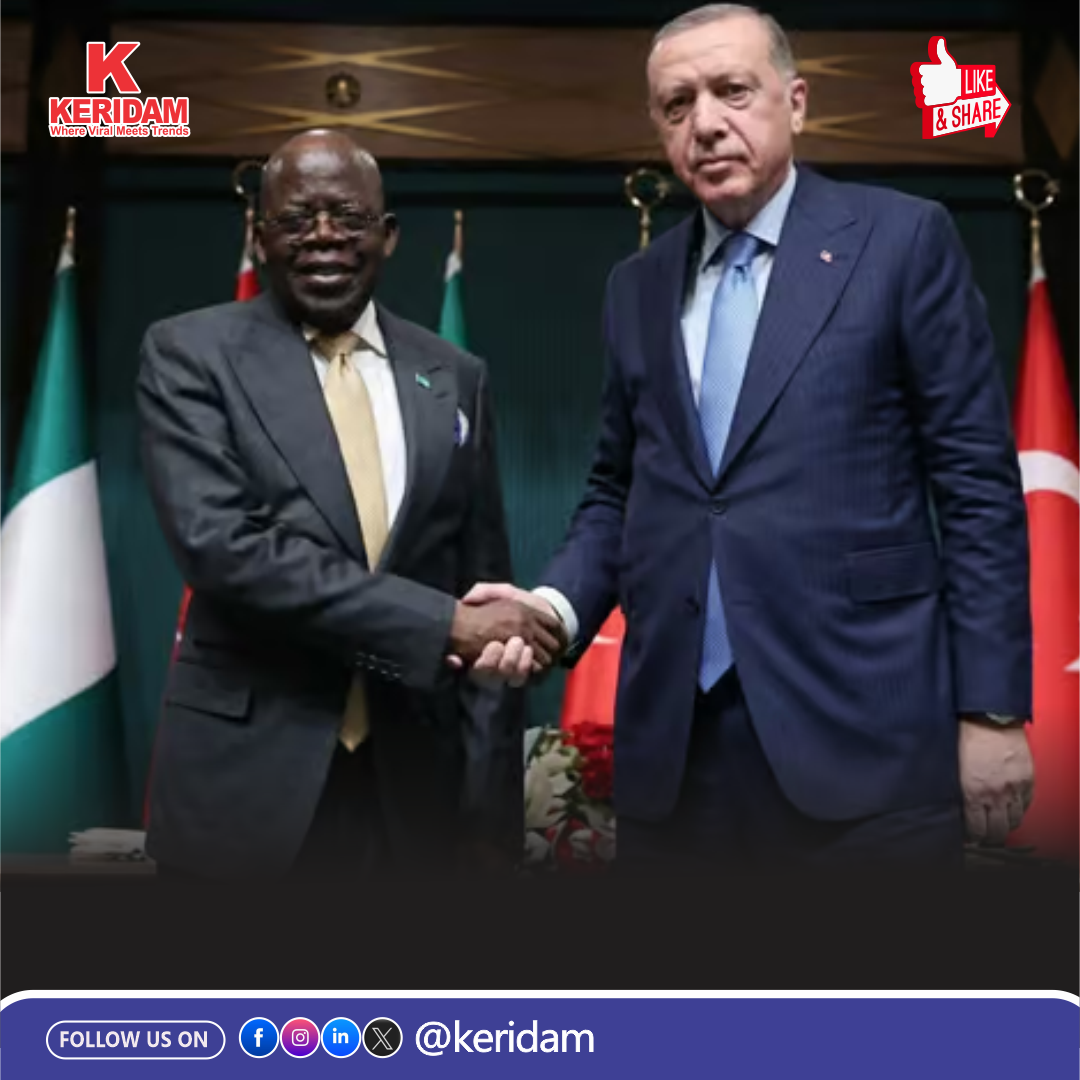
President Recep Tayyip Erdoğan’s remarks, reaffirming Turkey’s support for Nigeria in its fight against terrorism, landed in a world where security challenges no longer stay neatly within borders. They landed at a time when alliances are being re-examined, and when cooperation is starting to matter more than optics.
That’s what makes the Turkey and Nigeria counterterrorism talks worth paying attention to, not as breaking news, but as part of a larger, unfolding story.
When countries talk about counterterrorism, it’s rarely just about weapons or intelligence. It’s about trust. Shared priorities. And a willingness to cooperate beyond press statements.
The renewed focus on Turkey and Nigeria counterterrorism talks signals a deeper diplomatic rhythm between Ankara and Abuja, one that goes beyond courtesy visits and into sustained collaboration.
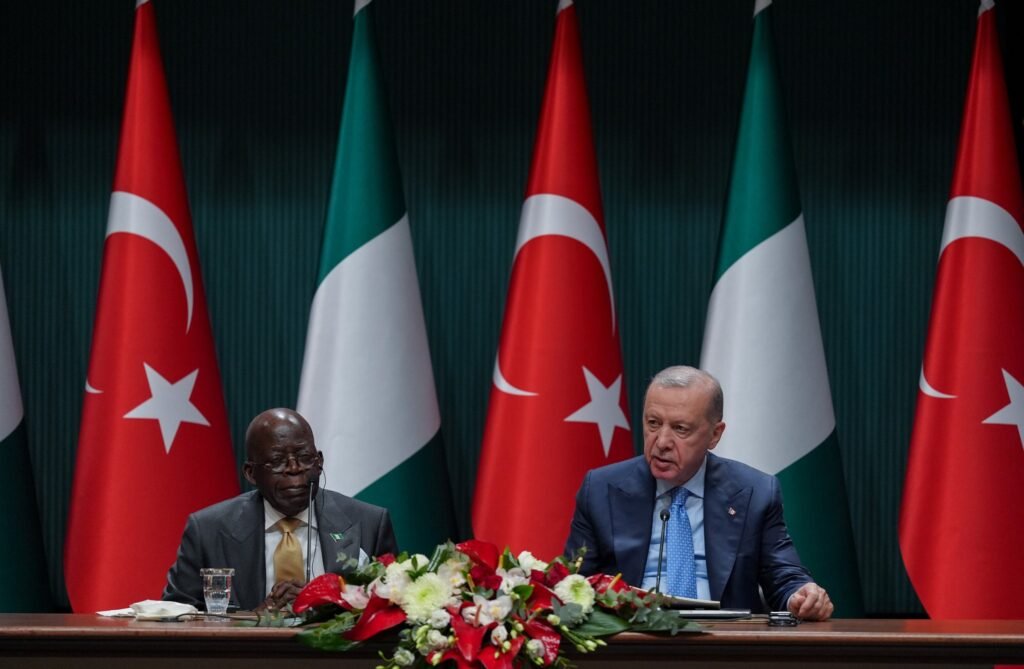
Nigeria continues to battle multiple security threats, from insurgent groups in the northeast to banditry and violent extremism in other regions. Turkey, on the other hand, brings years of counterterrorism experience shaped by its own internal and regional security challenges.
When those two perspectives meet, the conversation becomes less theoretical and more strategic.
It’s impossible to talk about the Turkey and Nigeria counterterrorism talks without acknowledging President Recep Tayyip Erdoğan’s influence on Turkey’s foreign policy direction.
Under his leadership, Turkey has increasingly positioned itself as a strategic partner to countries outside its immediate geographic sphere, particularly in Africa. This isn’t accidental. It reflects Ankara’s broader push for political, economic, and security partnerships across the continent.
President Recep Tayyip Erdoğan’s remarks came during discussions reported by Channels Television, where he reiterated Turkey’s commitment to supporting Nigeria’s counterterrorism efforts.
Importantly, the language used avoids presenting Nigeria as helpless. Instead, it recognises Nigeria as an active participant, leading its own fight while welcoming collaboration.
That framing matters.
The phrase sounds heavy, almost abstract. But in practical terms, Turkey and Nigeria counterterrorism talks can translate into several concrete areas of collaboration:
None of these happen overnight. But talks are how foundations are laid.
And foundations are exactly what these discussions appear to be building.
One reason the Turkey and Nigeria counterterrorism talks feel credible is that they’re not starting from scratch.
Turkey and Nigeria already maintain diplomatic, economic, and cultural ties. Turkish companies operate in Nigeria. Educational exchanges exist. Diplomatic channels are open and active.
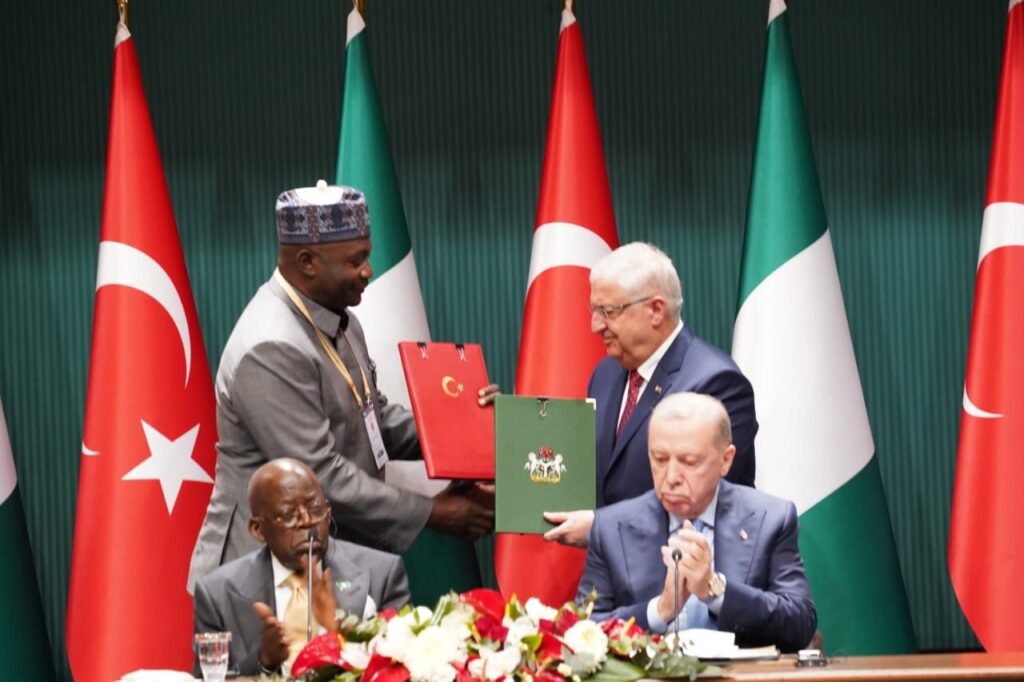
Counterterrorism discussions, therefore, aren’t being introduced into a vacuum. They’re being layered onto an existing relationship, which increases the chances that talk will turn into action.
For Nigeria, this moment is significant.
Security challenges remain one of the country’s most pressing issues, affecting daily life, economic stability, and public confidence. Any international partnership that strengthens capacity, without undermining sovereignty, is worth attention.
Nigeria’s fight against terrorism has remained a central national issue, particularly in the northeast, where insurgency has displaced communities and reshaped security priorities, as documented by BBC Africa.
The Turkey and Nigeria counterterrorism talks arrive at a time when Nigeria is actively reassessing its security strategies and partnerships. Diversifying allies, learning from different models, and avoiding overreliance on any single foreign partner has become increasingly important.
For Turkey, engagement with Nigeria aligns with its broader foreign policy goals.
Africa has become a key focus of Turkish diplomacy over the past decade. From trade to infrastructure to security cooperation, Ankara has steadily expanded its footprint.
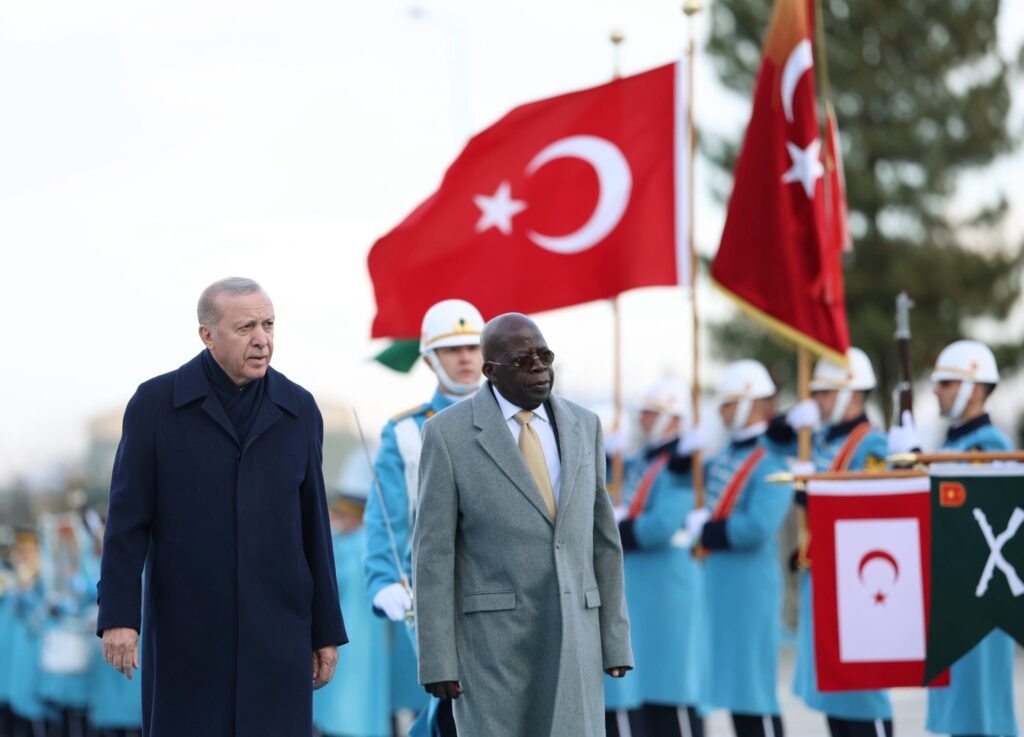
Turkey’s expanding diplomatic and security footprint across Africa has been widely analysed by Al Jazeera, highlighting Ankara’s growing interest in long-term partnerships on the continent.
The Turkey and Nigeria counterterrorism talks reinforce Turkey’s image as a global security partner, not just a regional power.
Success in Turkey and Nigeria counterterrorism talks won’t necessarily announce itself loudly.
It might show up quietly, in improved intelligence coordination, better-trained personnel, or more effective responses to security threats. It might take years to measure fully.
But the absence of dramatic headlines doesn’t mean absence of impact.
In fact, the most effective counterterrorism efforts often operate far from public view.
What stands out most about the Turkey and Nigeria counterterrorism talks is what they represent symbolically.
In a world where insecurity often pushes countries inward, these discussions signal the opposite, a recognition that collaboration is not weakness, but strategy.
Global security experts, including the United Nations Office of Counter-Terrorism, have long emphasised that terrorism requires coordinated international responses.
It’s easy to scroll past diplomatic news. Easy to dismiss it as “politics as usual.”
But the Turkey and Nigeria counterterrorism talks deserve attention because they touch on real lives of communities affected by violence, economies disrupted by insecurity, and regions struggling for stability.
They also remind us that solutions are rarely singular. They are built through dialogue, partnership, and sustained commitment.
The Turkey and Nigeria counterterrorism talks gaining momentum doesn’t signal an ending or a solution wrapped in certainty. What it signals is intention.
An intention to collaborate.
An intention to learn.
An intention to face shared threats together.
And in a global climate where uncertainty feels constant, intention itself is worth noting.
If this piece helped you see the Turkey and Nigeria counterterrorism talks from a wider lens, share it with someone who’s interested in global affairs beyond the headlines.
Follow our blog for thoughtful takes on international relations, politics, and the stories shaping how countries, and people connect.
Join the conversation with us on social media,Facebook, Instagram, and X (Twitter) for deeper insights and ongoing discussions.